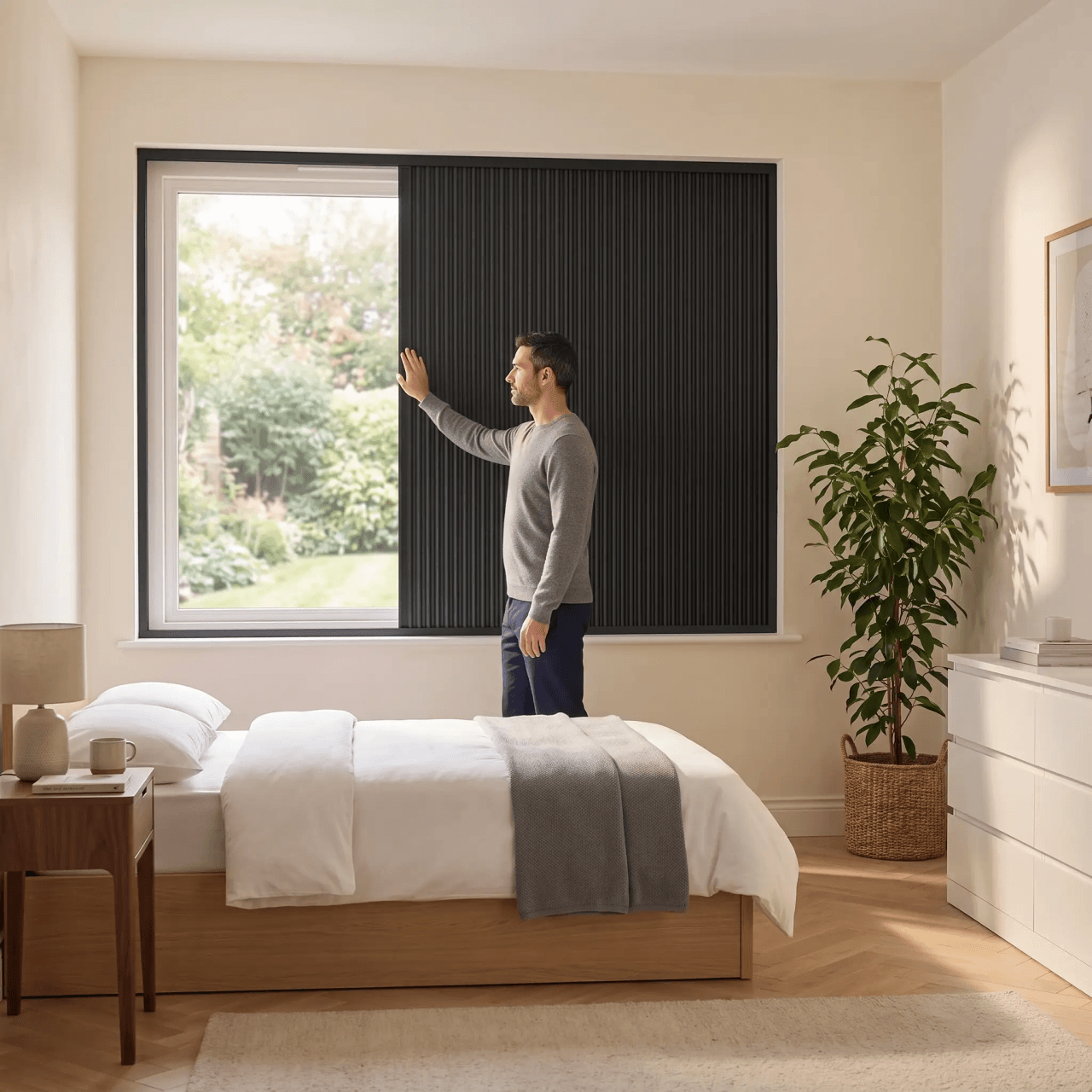


100 lux
One lit night strains the body
In a randomized PNAS study, a single night of sleeping in ordinary room light raised nighttime heart rate and measurably worsened next-morning insulin resistance (Mason, Zee et al., 2022).
The science of dark sleep
Independent sleep and circadian research keeps landing on the same conclusion: light during sleep — even a little — changes how your body rests and repairs. Here is what the studies actually measured.
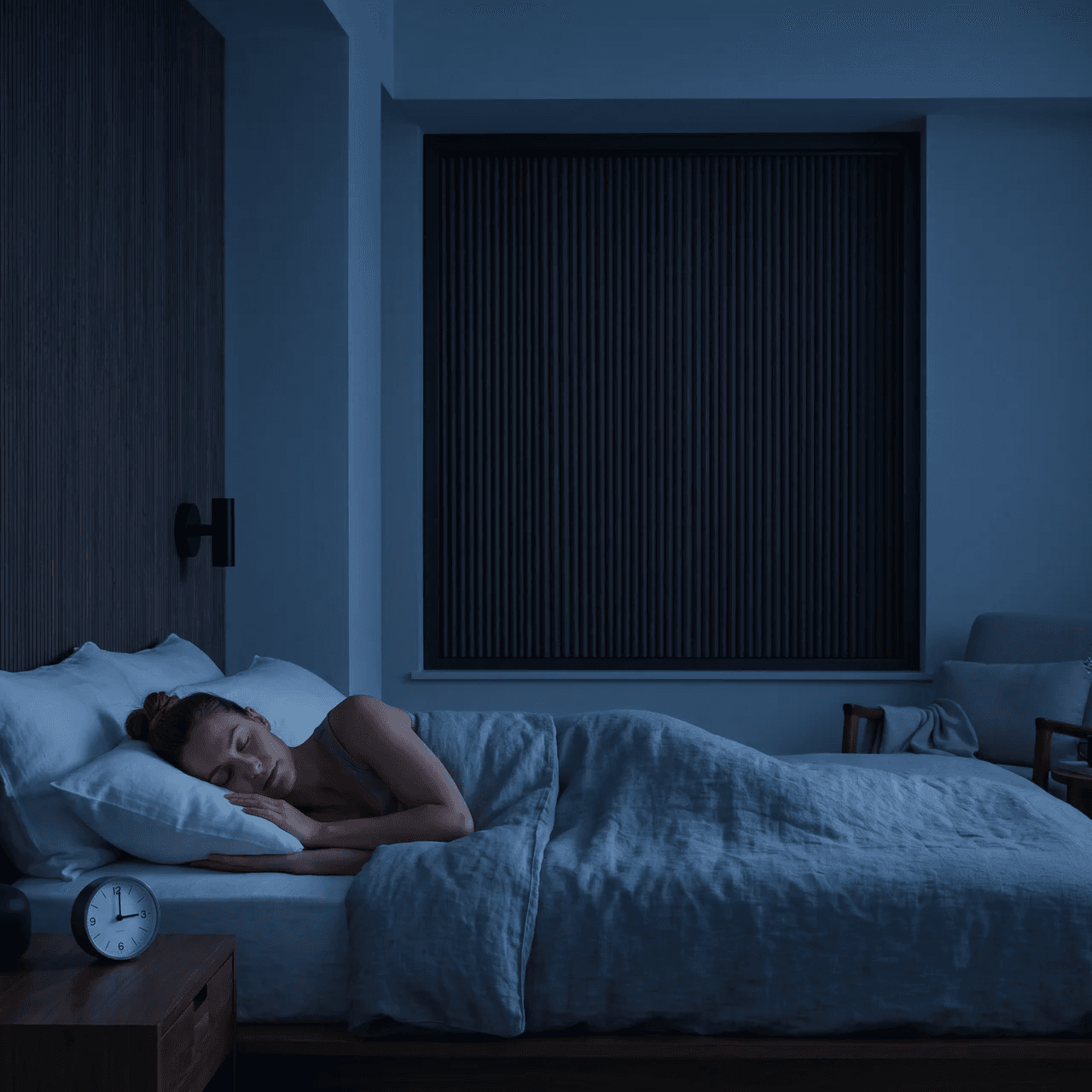
The science of dark sleep
100 lux
In a randomized PNAS study, a single night of sleeping in ordinary room light raised nighttime heart rate and measurably worsened next-morning insulin resistance (Mason, Zee et al., 2022).
5 lux
Dimmer than a streetlamp bleeding around a curtain edge — yet polysomnography showed more arousals and shallower sleep (Cho et al., 2016).
Deep sleep
Lights-on nights produced less slow-wave (deep) sleep and reduced delta and spindle power on EEG (Cho, Joo et al., 2013).
88,905
Higher night-time light exposure was linked to higher all-cause and cardiometabolic mortality in a large wearable-sensor cohort (Windred, Cain et al., 2024).
Research sources
These are the original studies and consensus paper referenced above. The links open the publisher page or PubMed record.
Mason et al. · PNAS · 2022
01Cho et al. · Sleep Medicine · 2013
02Cho et al. · Chronobiology International · 2016
03Brown et al. · PLOS Biology · 2022
04Windred et al. · PNAS · 2024
05Windred et al. · The Lancet Regional Health – Europe · 2024
06Made to measure
Choose your finish, enter the exact width and height, and configure a blind made for your opening.